
Bow Tie Effect in Oval Diamonds Explained
Why Does My Oval Diamond Have a Dark Shadow in the Center?
You are looking at a beautiful oval diamond, but something immediately catches your eye: right across the center of the stone runs a distinct, dark shadow. At this moment, you might be wondering whether the stone has a structural flaw or is of inferior quality.
There is no reason to worry. You are observing one of the most common optical characteristics of elongated diamond cuts. In gemological terms, this is known as the bow-tie effect. It is a completely normal physical phenomenon, easily explained, and definitely not an automatic deal-breaker. In this guide, you will learn the exact technical causes of this shadow and how to use data to select an oval diamond that meets your standards.
What Is the Bow-Tie Effect?
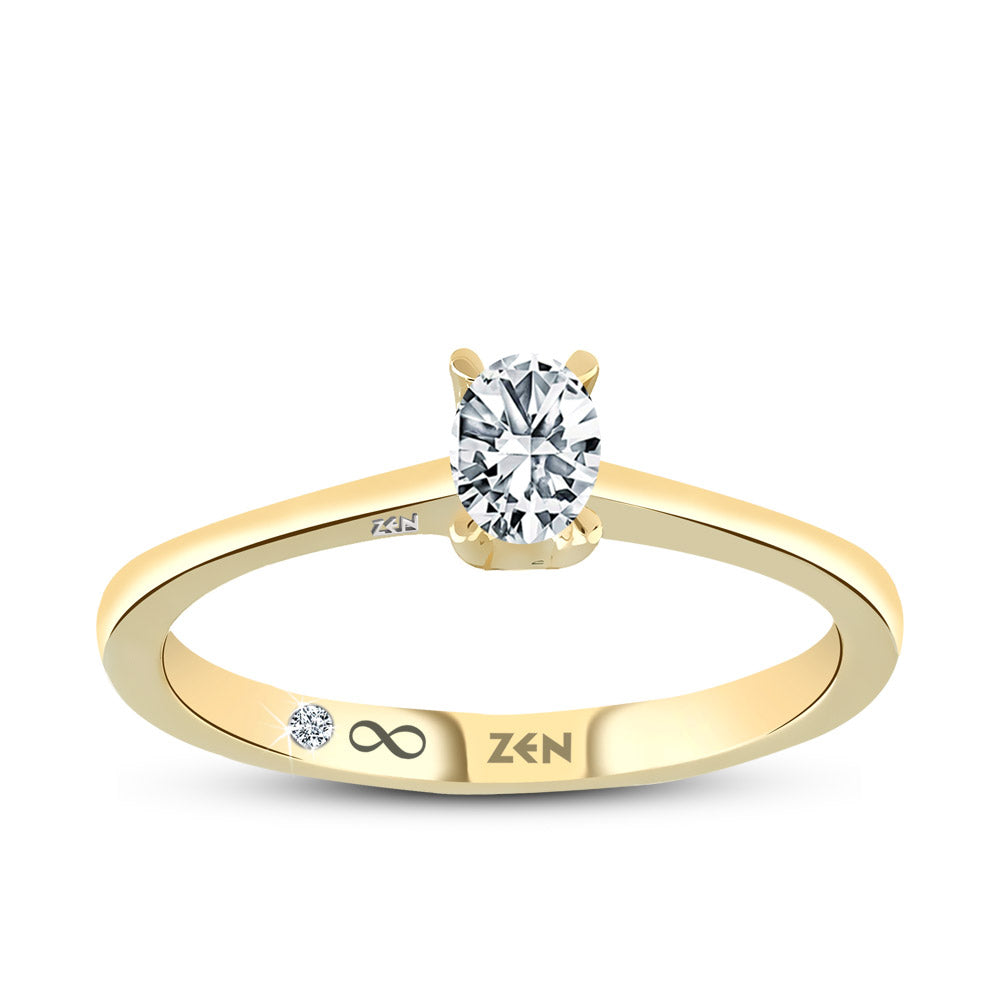
The bow-tie effect in diamonds describes exactly what it sounds like: a dark, bow-tie-shaped shadow extending horizontally across the center of the stone.
The key detail here: it is a purely optical phenomenon, not a structural flaw or inclusion. On certificates from renowned grading institutes like the GIA or IGI, you will never find a score for the bow-tie effect. It arises exclusively from the way light travels through certain elongated cuts. While round brilliant diamonds are perfectly symmetrical and do not exhibit this phenomenon, the bow-tie effect is extremely common in oval, marquise, and pear cuts.
The intensity of this shadow varies dramatically. It ranges from a barely perceptible contrast to a massive, dark bar. It is precisely this range that is relevant to your buying decision.
Why Does This Effect Occur? The Science Behind It
Diamonds are cut to function as high-precision mirrors. The facets reflect light from the pavilion (the lower half of the diamond) back up through the crown (the top surface) directly into the viewer's eye.
In elongated shapes like the oval cut, the center of the stone is narrower relative to its ends. This means fewer facets are concentrated in this central area. If the angles of the pavilion facets are not perfectly aligned with this narrow space, light escapes out the sides instead of reflecting upward. This light leakage creates the dark bow-tie shadow.
Three main factors are responsible for how pronounced it appears:
- Facet Alignment: Improperly aligned pavilion facets disrupt light reflection at the center.
- Cut Proportions: A stone cut too shallow allows light to leak out the bottom, while a stone cut too deep traps light inside.
- Length-to-Width Ratio: Strongly elongated oval diamonds (with a ratio above 1.50:1) are significantly more prone to heavy shadow formation.
Imagine the facets like a series of mirrors. In a round diamond, every mirror is angled perfectly inward. In an oval, the mirrors in the middle have to work harder to redirect the light—and sometimes they simply miss that precise angle.
Is the Bow-Tie Effect a Quality Defect?
The objective answer is: it depends entirely on the degree of shadowing. A bow-tie effect is not inherently "bad."
A faint, barely visible shadow is completely normal. In fact, it often gives the stone a subtle contrast and optical depth, making the surrounding facets appear even brighter and more brilliant. A moderate bow-tie is also acceptable to many buyers, provided the overall cut quality and brilliance of the stone remain compelling.
However, a strong or very dominant bow-tie is problematic. A massive dark bar causes the center of the stone to look dull and significantly reduces the overall sparkle (scintillation) of the diamond.
The most important insight for buyers: since this effect is not noted on GIA or IGI certificates, a diamond can carry an "Excellent" cut grade and still exhibit a heavy shadow. The question is never whether an oval diamond has a bow-tie, but only how pronounced it is.
How to Inspect and Evaluate the Stone Before Buying
Since certificates have their limits here, visual inspection is your most crucial tool. Pay attention to the following points:
- Testing Under Different Lighting Conditions: View the stone in natural daylight, soft indoor lighting, and under direct spotlights. Strong spotlights tend to accentuate shadows heavily.
- Tilting the Stone: Gently tilt the diamond back and forth. A light bow-tie shifts and blends with the sparkle, whereas a heavy shadow remains rigid and dark in the center.
- Analyzing 360-Degree Videos: When buying online, a high-resolution 360° video is essential. A static photo can easily conceal the severity of the shadow (or artificially exaggerate it due to studio lighting).
- Direct Comparison: If possible, view two or three oval diamonds side by side. Your eye will quickly calibrate and learn to distinguish a "minimal" shadow from a "strong" one.
How to Minimize the Effect: Technical Specifications
If you prefer a stone with minimal shadowing, you should stick to strict technical parameters to minimize the risk.
Look for these specific proportions when purchasing:
- Symmetry: Always prioritize stones with a symmetry rating of Excellent or Very Good.
- Length-to-Width Ratio: Stay within the ideal tolerance range between 1.35:1 and 1.50:1. Ratios above 1.55:1 drastically increase the risk of a dark center.
- Depth & Table: A total depth between 58% and 62% paired with a table size between 53% and 63% serves as an excellent benchmark for well-proportioned oval diamonds.
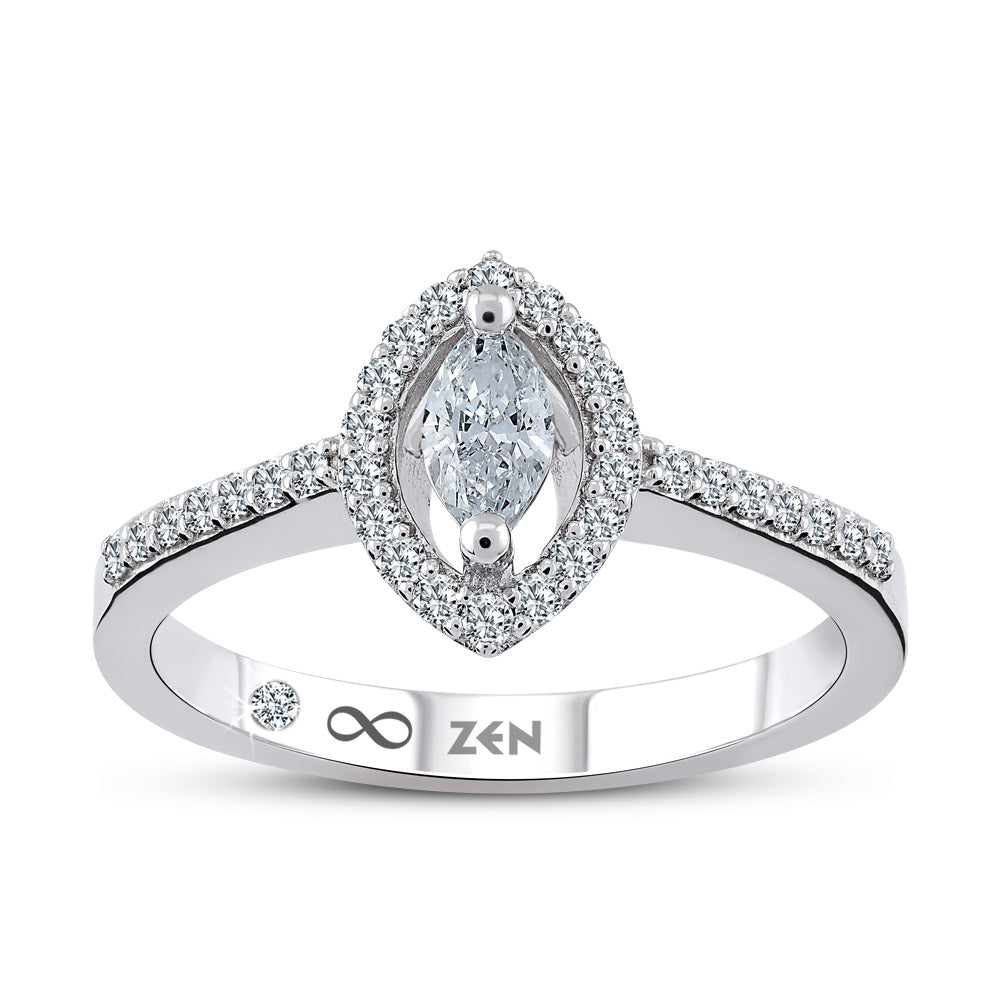
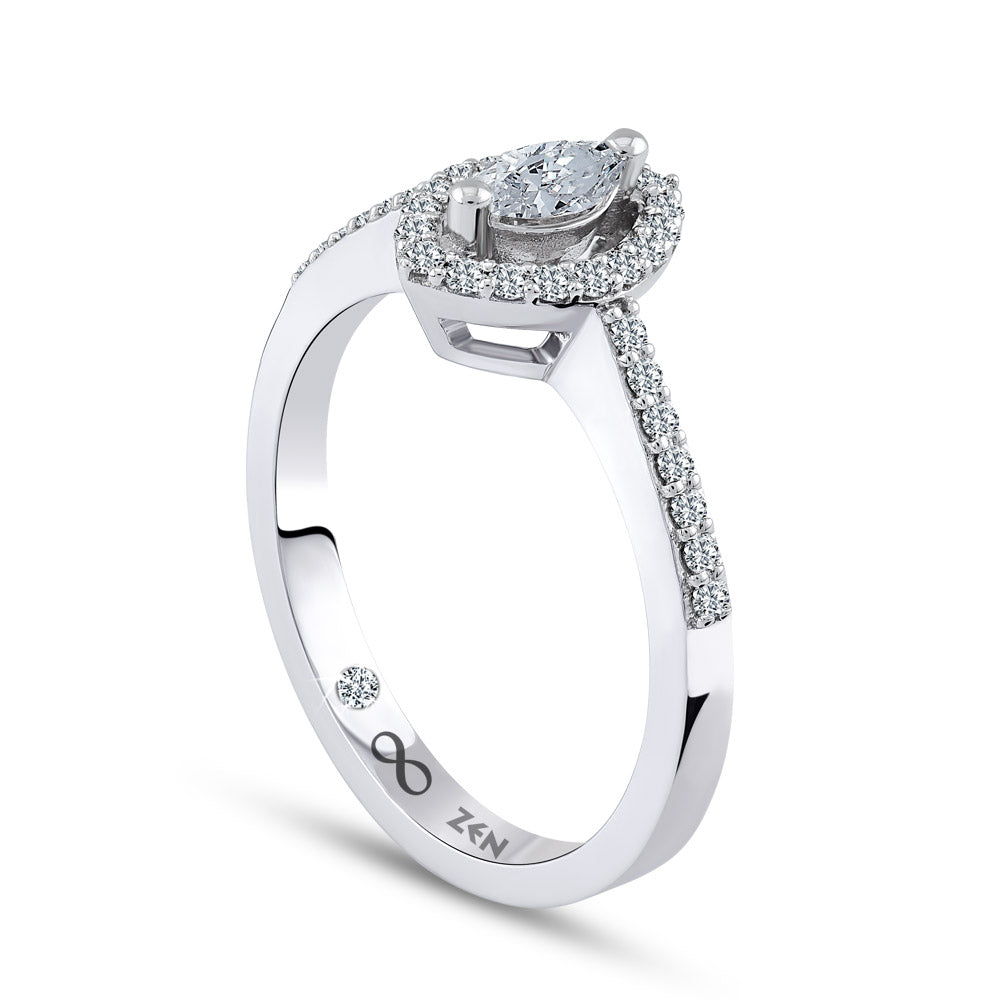
The Influence of Ring Setting: Ring design can also help guide visual perception. A halo setting draws the eye outward to the sparkling border area and minimizes focus on the center. East-West settings (where the diamond is mounted horizontally) alter the angle of light entry and can help disguise the shadow.